Financial Systems Cannot Pause for Modernization
Modern financial platforms operate under constant pressure. Transaction volumes continue to rise as digital payments expand across markets. Real time settlement networks, embedded finance platforms, and cross border payment systems are increasing the complexity of financial infrastructure every year.
At the same time, regulatory oversight continues to intensify. Compliance reporting, audit traceability, and operational transparency are now expected to operate continuously alongside customer facing services. Yet many financial institutions still run critical workloads on systems that were originally designed decades ago. These systems process billions of transactions reliably every year. Replacing them outright is rarely realistic.
Modernization therefore becomes a paradox. Financial platforms must evolve to support new products and digital services, but they cannot afford to interrupt the systems that already run the business.
⬛ Financial systems process billions of transactions every day. Even seconds of disruption can impact payment flows, settlement pipelines, and customer access across entire financial ecosystems.This operational reality is why modernization strategies in finance are fundamentally different from most other industries.
Why Most Modernization Strategies Fail
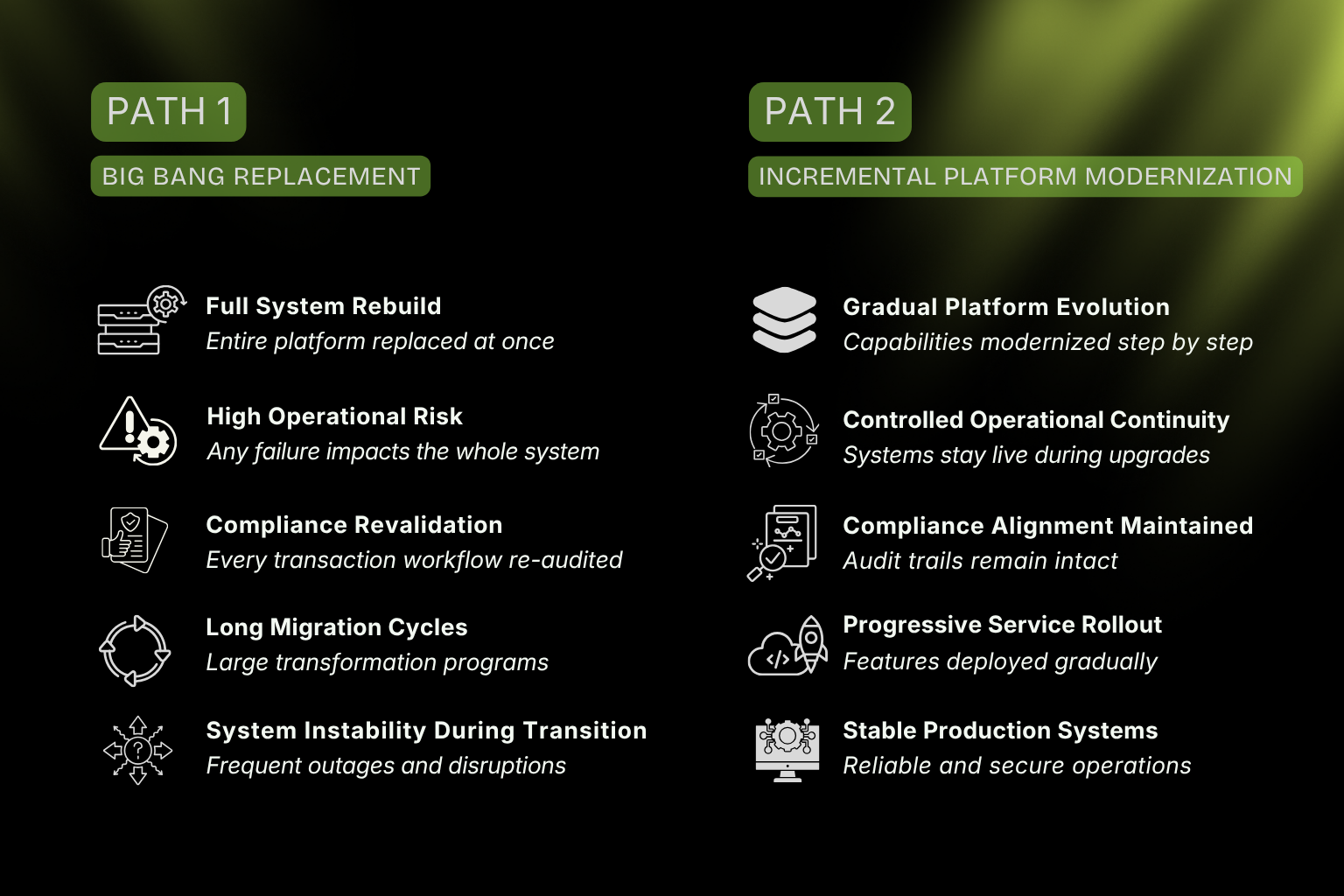
Many modernization efforts begin with the assumption that legacy infrastructure must be replaced. Large migration programs are planned. Entire platforms are scheduled for rebuilds. Multi year transformation roadmaps are drafted. In practice, these approaches struggle to succeed.
Core financial systems operate within tightly controlled regulatory frameworks. Payment flows, ledger systems, and compliance processes cannot tolerate operational instability. A full platform replacement risks disrupting the very systems that maintain financial trust. This is why many modernization programs stall after initial phases. Teams attempt to rebuild systems that must remain operational throughout the transition. (Explore why building fast can break system stability.)
The problem is not modernization itself. The problem is the assumption that modernization requires replacement.
The Real Constraint: Compliance and Transaction Integrity
Financial systems operate under constraints that most software platforms do not face. Every transaction must be traceable. Every customer record must follow strict identity and verification rules. Audit trails must remain accessible years after a transaction occurs.
In many jurisdictions, regulatory frameworks require:
- immutable transaction records
- strict access control policies
- complete historical auditability
- operational continuity during upgrades
These requirements mean that modernization cannot disrupt the integrity of financial records or the stability of transaction pipelines. Any architecture change must preserve compliance and system trust simultaneously.
This is why financial modernization is fundamentally different from modernization in other industries.
How Financial Platforms Actually Modernize
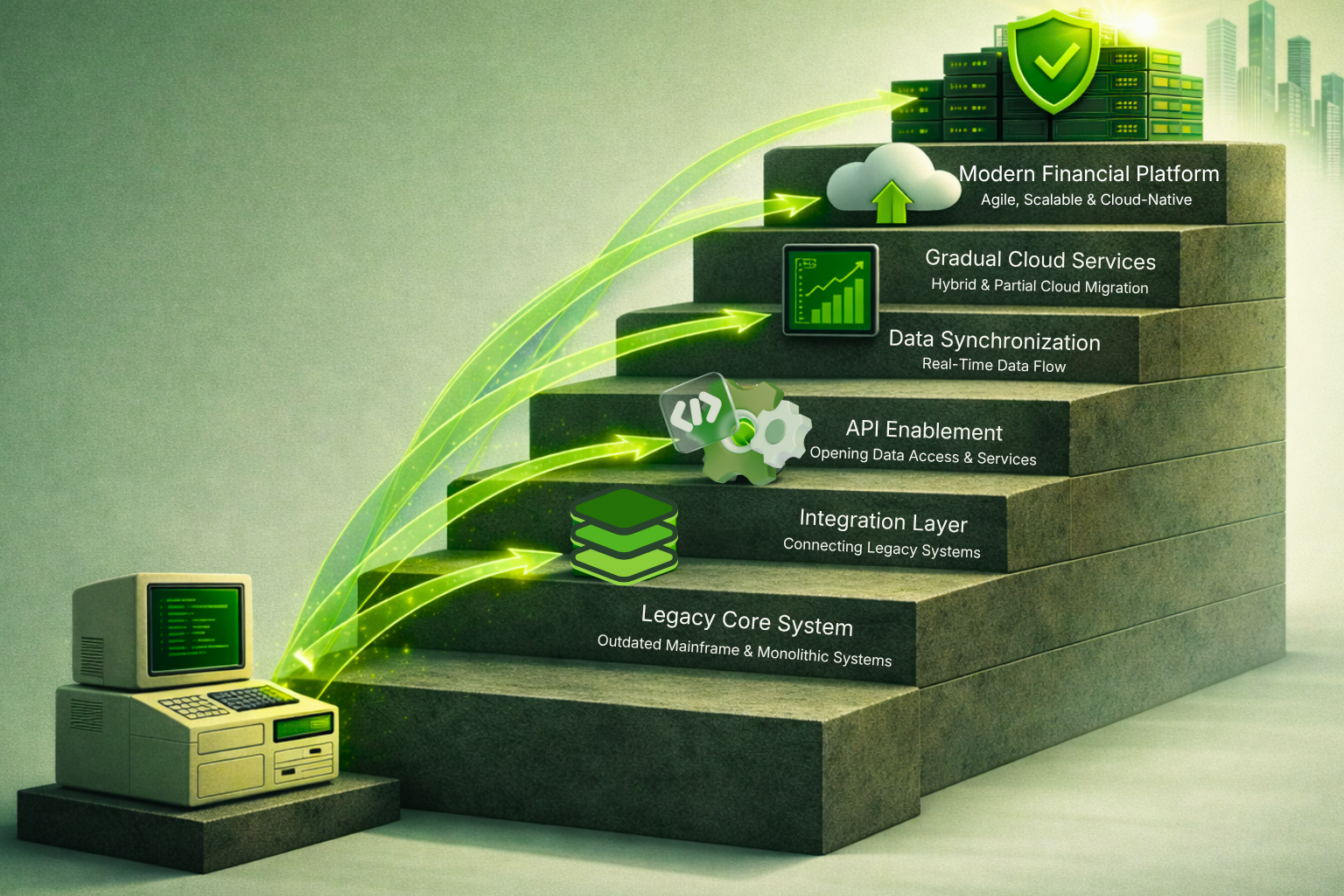
Successful modernization strategies treat legacy systems as operational foundations rather than obstacles. Instead of replacing entire platforms, teams introduce layers that gradually evolve system capabilities while keeping core processes stable.
Common modernization patterns include:
- introducing API layers that expose legacy capabilities to modern applications
- separating customer facing services from transaction processing engines
- synchronizing data pipelines so legacy ledgers and modern services remain consistent
- gradually migrating specific workloads to cloud environments while core ledgers remain stable
This incremental approach allows financial platforms to evolve without breaking existing operational guarantees. Modernization becomes a controlled expansion rather than a disruptive rebuild.
Market Reality: Financial Infrastructure Is Rapidly Expanding
Digital finance adoption continues to accelerate globally. Industry reports show that digital payment volumes now exceed hundreds of billions of transactions annually. At the same time, embedded financial services are expanding into sectors such as ecommerce, mobility platforms, and enterprise software.
This expansion increases the demand placed on financial infrastructure. Systems originally designed for batch processing now support real time settlement, API based services, and global transaction flows. Financial institutions are therefore investing heavily in platform modernization. Spending on banking technology transformation continues to rise as institutions upgrade payment systems, compliance infrastructure, and customer experience platforms.
However, the institutions that succeed in modernization rarely replace everything at once. They evolve their platforms in stages while preserving operational continuity.
Big Bang Replacement vs Incremental Modernization
Operational Decisions That Determine Success
Financial modernization is less about technology selection and more about architectural discipline. Successful modernization programs typically include the following operational decisions.
First, separate customer facing services from the underlying transaction engines so product innovation can move faster without affecting ledger integrity.
Second, implement strong API governance so new services interact with legacy systems through controlled interfaces.
Third, maintain strict data synchronization between legacy platforms and modern infrastructure to avoid reconciliation errors.
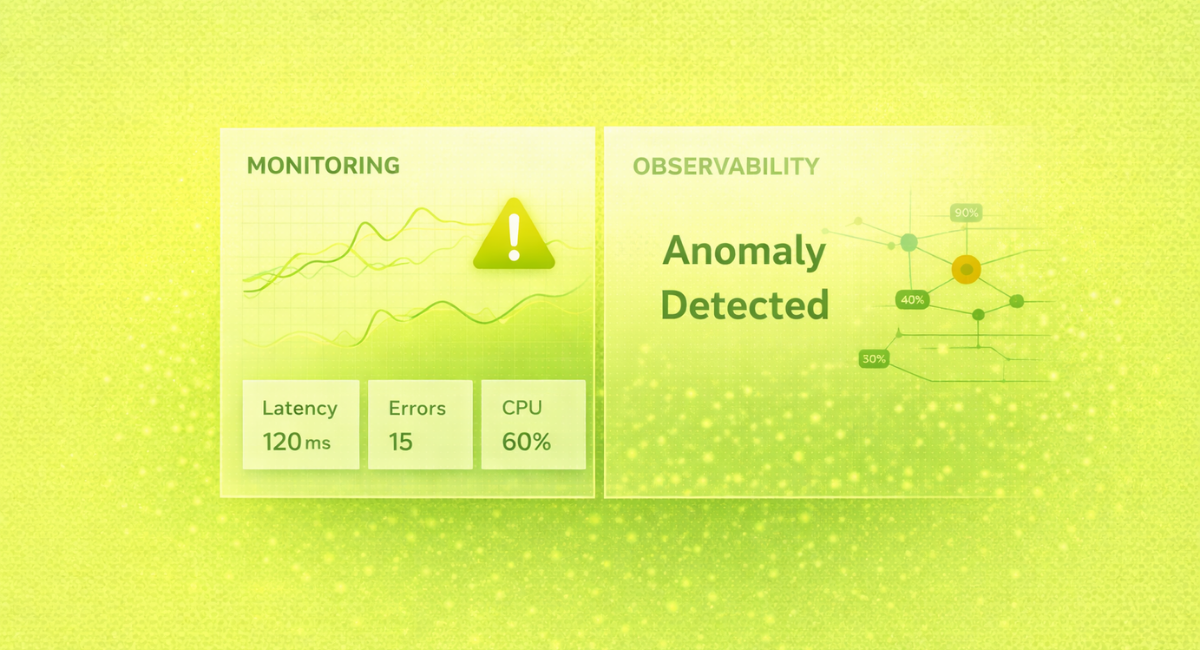
Fourth, ensure observability across payment pipelines and compliance workflows so system behavior remains transparent during transition.
These decisions allow financial institutions to modernize safely while continuing to operate under strict regulatory framework. (Discover how data architecture ensures operational resilience.)
The Future of Financial Platform Architecture
Financial infrastructure will continue evolving as digital payments expand and financial services integrate into new platforms. Real time payments, programmable financial services, and AI assisted risk analysis will introduce new operational requirements across banking systems. The institutions that adapt successfully will not be those that discard legacy systems completely. They will be the ones that modernize intelligently while preserving the stability of core financial operations.
Modern financial architecture is not defined by replacing everything. It is defined by enabling systems to evolve without breaking trust. (Discover why AI-native systems outperform layered AI approaches.)
Outwork POV
At Outwork, modernization begins with the systems that already carry real financial operations. We focus on stabilizing platform architecture, introducing controlled interfaces, and embedding observability across transaction workflows so financial systems can evolve safely. When modernization respects operational constraints, financial platforms can introduce innovation without risking the trust that their systems were built to protect.