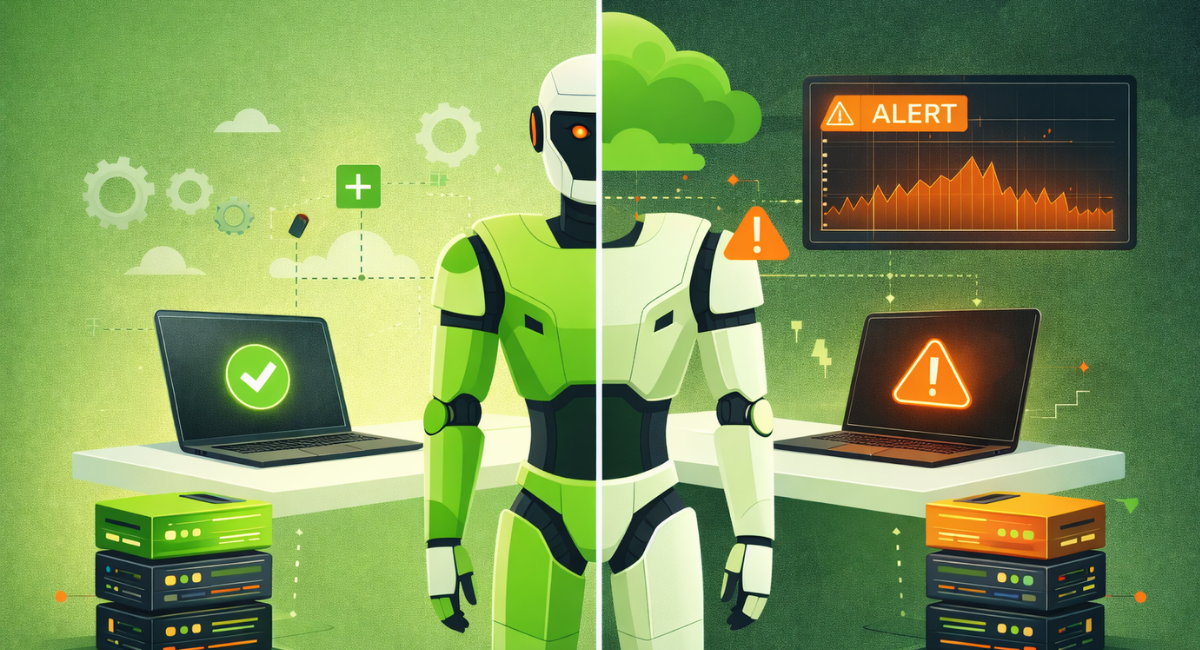
Artificial intelligence is no longer the limiting factor for most organizations. Data is abundant. Models are mature. Cloud infrastructure is widely available. Across industries, teams agree on the potential of AI to improve operations, reduce costs, and accelerate decision-making. Yet execution continues to stall. According to industry studies, while nearly every enterprise launches AI initiatives, fewer than 30% succeed in bringing them into sustained production. Most efforts stop at pilots.
Not because AI is unclear. Because the systems expected to carry it were never designed for operational change.
Where Execution Really Breaks Down
Most organizations aren’t debating whether intelligence belongs in their workflows. They’re asking why it’s so difficult to make AI work inside live operations, existing platforms, and environments that cannot afford disruption. The problem isn’t ambition. It’s readiness. Modern systems rarely fail because they lack advanced technology. They struggle because they carry too much history. Years of infrastructure decisions layered under pressure. Integrations added to meet immediate needs. Manual processes introduced “temporarily” and never removed. Visibility slowly lost as complexity accumulates. None of this breaks a system outright. But it changes how the system behaves. By the time AI enters the conversation, teams are already managing operational drift — architectural sprawl, unclear ownership, brittle workflows, and rising support overhead. Intelligence doesn’t correct this drift. It inherits it. This is where most AI initiatives quietly slow down.
Why “Working Systems” Still Create Drag
Many platforms technically work. Applications stay online. Transactions complete. Dashboards populate. But operationally, they demand increasing effort. Support tickets rise. Cloud costs drift upward. Changes take longer to validate. Releases become riskier. Teams spend more time maintaining behavior than improving outcomes. Nothing appears broken.
Yet everything requires more attention than it should. This is the hidden cost of systems built for speed instead of durability.
Delivery velocity creates early momentum. Features ship. Roadmaps move forward. But structural decisions deferred in the name of speed surface later as friction, rework, and manual intervention. The system keeps moving — but with growing resistance. This is not a talent problem. It’s a systems problem.
Modernization Isn’t Reinvention. It’s Preparation.
Modernization is often treated as something to “get to” after experimentation. In reality, modernization determines whether value can exist at all. Not modernization as replacement. Not sweeping transformation. But modernization as preparation. It means clarifying system boundaries. Reducing operational drag. Stabilizing what runs every day. Making behavior predictable before making it intelligent. This work doesn’t generate hype. It creates headroom. Organizations that succeed with AI don’t move faster at the surface. They move steadier underneath. They clean up interfaces. They reduce manual effort before automating decisions. They invest in observability, cost clarity, and operational discipline. By the time intelligence arrives, it fits — because the system is ready to carry it. This is exactly where focused modernization services make the difference between experimentation and execution.
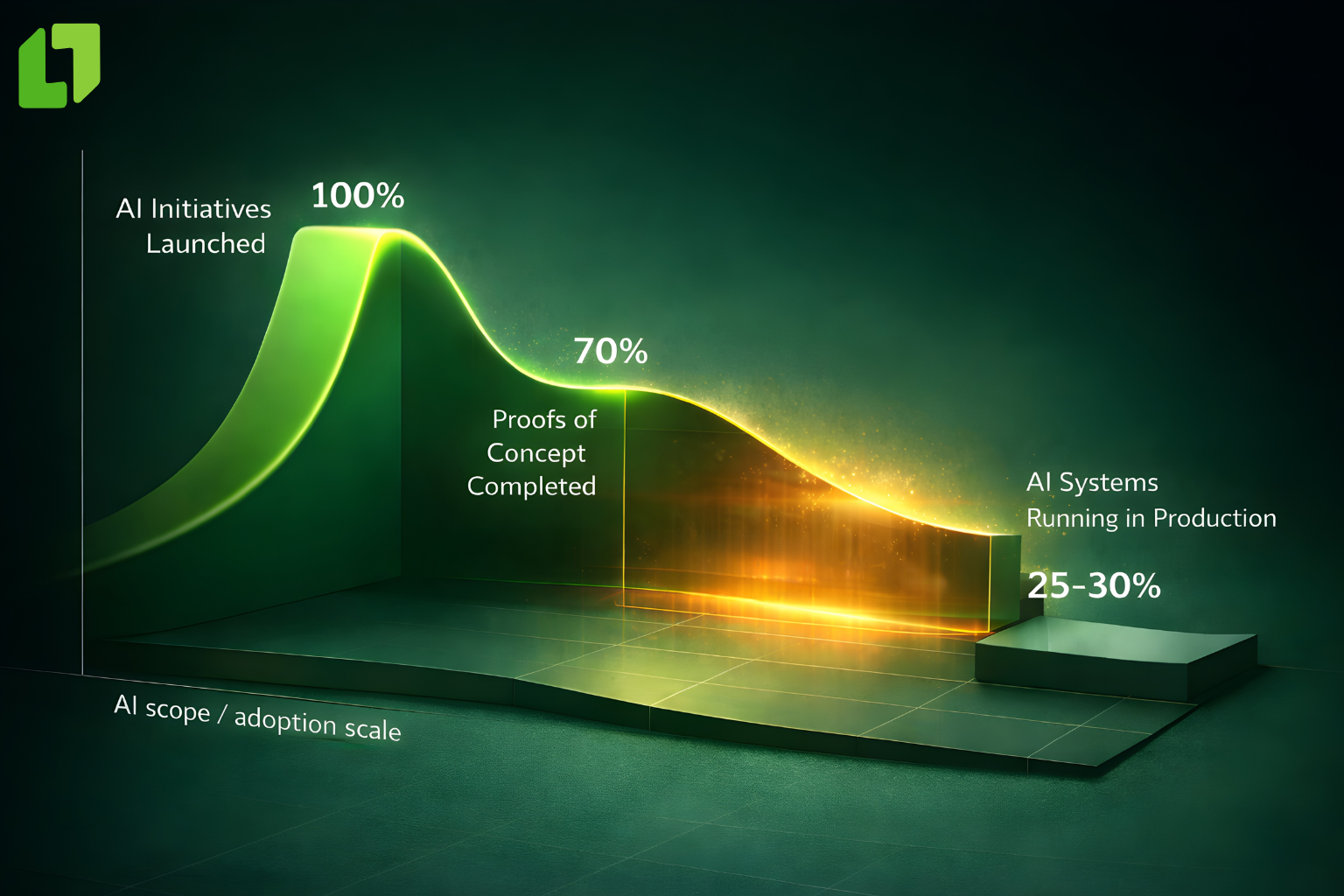
Most AI Initiatives Never Reach Production
While most organizations experiment with AI, fewer than one-third succeed in operationalizing it at scale. The gap isn’t model capability — it’s system readiness.
Sources: Gartner + BCG enterprise AI adoption studies (2023–2024)
What Changes When Systems Are Ready
When modernization is done well, the impact shows up quietly across operations:
- Cloud costs become predictable instead of drifting
- Incidents surface earlier through observability instead of support tickets
- Automation reduces workload instead of adding complexity
- Teams regain time for improvement instead of firefighting
We’ve seen organizations unlock 20–40% reductions in infrastructure spend simply by stabilizing system behavior before introducing automation. Not through aggressive optimization. By removing fragmentation and restoring operational clarity. This is where resilience becomes a business advantage. Systems designed to hold change absorb growth instead of resisting it.
Why This Matters More Now
As AI becomes part of everyday operations, architectural shortcuts become more expensive. Intelligent systems amplify both strengths and weaknesses. They don’t compensate for structural gaps. When governance is unclear, AI accelerates inconsistency. When data is fragmented, models inherit contradictions. When workflows are brittle, automation exposes it faster. AI doesn’t fix foundations. It reveals them. This is why modernization cannot be postponed. Until systems are designed to carry change without chaos, intelligence remains theoretical. Once they are, AI becomes an outcome — not a risk. This is especially visible across regulated environments like fintech systems, where operational readiness directly determines compliance, uptime, and customer trust.
The Long View
Building fast is often necessary. Building right is what lasts. Organizations that invest in operational readiness early don’t eliminate change — they absorb it. Their platforms evolve without constant rework. Their teams spend less time reacting and more time improving outcomes. In the long run, competitive advantage doesn’t come from how quickly you ship. It comes from how calmly your systems operate once everything is live. Modern systems don’t shout. They hold. That’s where real progress begins.
If you’d like to explore how Outwork modernizes real production environments — from observability to financial platforms — start a conversation with us.