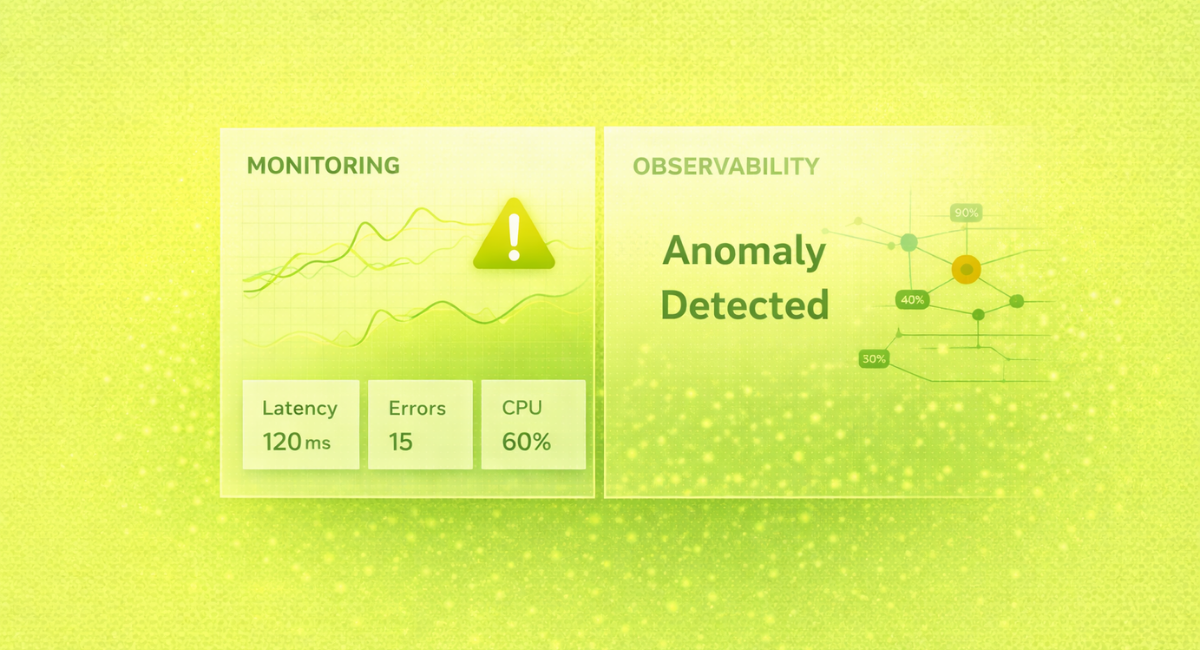
Why Speed Creates Momentum — and Architecture Determines Survival
Shipping fast feels like progress. Features launch. Roadmaps move. Stakeholders see velocity. Early dashboards look healthy. For many teams, delivery speed becomes the primary signal of success. But systems don’t reveal their true cost at launch. They reveal it after go-live — when real users arrive, edge cases multiply, integrations deepen, and operational load replaces controlled testing environments. That’s when speed meets reality. And for most organizations, that’s when the hidden cost of building fast starts to surface.
Early Momentum Hides Structural Debt
In the short term, velocity delivers visible wins:
- Releases ship faster
- MVPs validate quickly
- Teams stay energized
- Leadership sees progress
What’s less visible is what speed quietly defers:
- Architectural clarity
- Ownership boundaries
- Observability
- Operational discipline
These don’t slow teams immediately. They slow systems later.
Industry data reflects this pattern clearly:
- Over 70% of digital transformation initiatives miss their original targets, largely due to operational complexity and system readiness gaps.
- Cloud spending continues to rise by 20–30% year over year for most enterprises — not because usage explodes, but because architectures drift and inefficiencies accumulate.
- Engineering teams now spend 40–60% of their time maintaining existing systems, rather than improving them.
Nothing breaks overnight. Friction accumulates quietly.
Where Fast Systems Start to Fracture
Most systems don’t fail because they were built quickly. They struggle because they were never designed to carry sustained load.
As usage grows:
- Integrations multiply
- Data paths diverge
- Exceptions become normal
- Manual workarounds creep in
- Ownership becomes unclear
Teams compensate with scripts, patches, and operational heroics.
At this stage:
Applications stay online.
Transactions complete.
Dashboards populate.
Yet operationally:
- Support tickets increase
- Cloud costs drift upward
- Changes take longer to validate
- Releases feel riskier
- Engineers spend more time maintaining behavior than improving outcomes
Nothing appears broken. But everything requires more effort than it should. This isn’t a talent problem. It’s a systems problem.
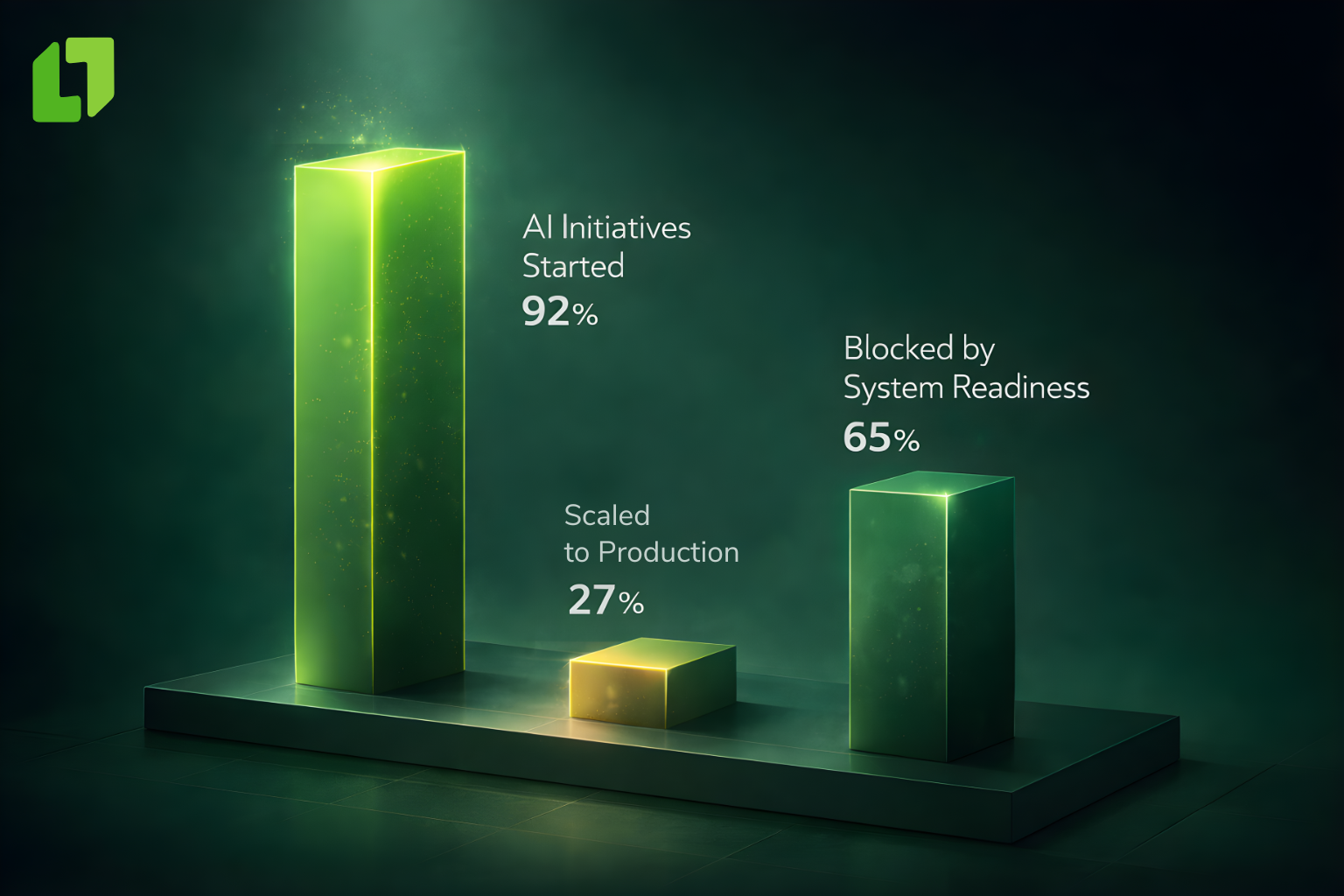
AI Adoption Reality: Pilots Are Easy. Production Is Hard.
Data (aggregated from Gartner, McKinsey, IDC 2024):
- 92% of enterprises launch AI pilots
- 27% successfully scale AI into production
- 65% cite operational readiness as the primary blocker
Most AI initiatives stall not because models fail — but because operational systems aren’t ready to carry them.
Delivery Optimizes for Motion. Architecture Optimizes for Survival.
Delivery teams are rewarded for shipping. Architecture teams are responsible for what survives. When these goals drift apart, systems accumulate risk. Decisions optimized for short-term velocity often ignore long-term behavior:
- Temporary fixes become permanent
- “We’ll clean it up later” becomes operational reality
- Monitoring is added after incidents
- Automation is bolted on instead of embedded
Technical debt isn’t always created by bad decisions. More often, it’s created by rushed ones. The cost doesn’t arrive as a single failure. It arrives as constant drag.
The Myth of Fixing It Later
“Fix it later” assumes later will be easier. It rarely is. Once systems are live, every change must account for:
- Production traffic
- Historical data
- Customer workflows
- Regulatory constraints
- Integration dependencies
Retrofitting discipline is always more expensive than designing for it upfront. Later doesn’t bring clarity. It brings constraints.
What Building Right Actually Means
Building right isn’t about moving slowly. It’s about building with intent.
Systems designed for longevity prioritize:
- Clear ownership boundaries
- Explicit data flows
- Predictable failure modes
- Embedded observability
- Operational clarity from day one
They reduce ambiguity before scale arrives. They define responsibilities early. They make tradeoffs visible. This discipline doesn’t eliminate speed. It determines where speed is safe.
How Systems Behave After Go-Live Is the Real Test
The real test of architecture begins after deployment.
That’s when systems face:
- Real users
- Real volumes
- Real edge cases
- Real operational pressure
This is where observability matters more than diagrams. Where automation either reduces load — or creates it. Where systems either grow quieter over time, or demand increasing attention. Well-designed platforms stabilize. Poorly designed ones escalate. The difference rarely shows up in launch metrics. It shows up in daily operations.
Why This Matters More Now
As AI and automation move deeper into production environments, architectural shortcuts become more expensive. Intelligent systems amplify both strengths and weaknesses. They don’t compensate for structural gaps. When governance is unclear, AI accelerates inconsistency. When data is fragmented, models inherit contradictions. When workflows are brittle, automation exposes it faster. AI doesn’t fix foundations. It reveals them. This is why operational readiness now determines whether intelligence becomes an advantage — or another layer of complexity. Especially in regulated environments like fintech, where uptime, compliance, and customer trust are inseparable from system behavior.
The Business Impact of Building Right
Organizations that invest in architectural discipline early see measurable outcomes:
- Cloud spend becomes predictable instead of drifting
- Incidents surface earlier through observability instead of customer tickets
- Automation reduces workload instead of adding operational burden
- Teams regain time for improvement instead of firefighting
We’ve seen enterprises unlock 20–40% reductions in infrastructure costs simply by stabilizing system behavior before introducing automation. Not through aggressive optimization. By restoring clarity across core platforms. This is where operational resilience becomes a growth lever. Systems designed to hold change absorb growth instead of resisting it.
The Long View of Competitive Advantage
Building fast is often necessary. Building right is what lasts. Organizations that invest in operational readiness early don’t eliminate change — they absorb it. Their platforms evolve without constant rework. Their teams spend less time reacting and more time improving outcomes. In the long run, competitive advantage doesn’t come from how quickly you ship. It comes from how calmly your systems operate once everything is live. Modern systems don’t shout. They hold. That’s where real progress begins.
Outwork Perspective
This is the work Outwork focuses on:
Modernizing real production environments so growth doesn’t create chaos — across observability, core platforms, and financial systems.
If you’d like to explore how we help teams build systems that hold change, start a conversation with us.